How do professional installers soundproof a home golf bay for daily play?
Impact noise travels through structure, not just air. Here is how a bay is kept quiet enough for early mornings.
Installers treat the noise as structural, absorbing impact at the source with resilient underlay beneath the hitting area and a decoupled screen frame, so vibration never enters the joists and walls. Room treatment then tames echo and airborne sound. Planned in from the start, this lets a bay be used early or late without disturbing the house.
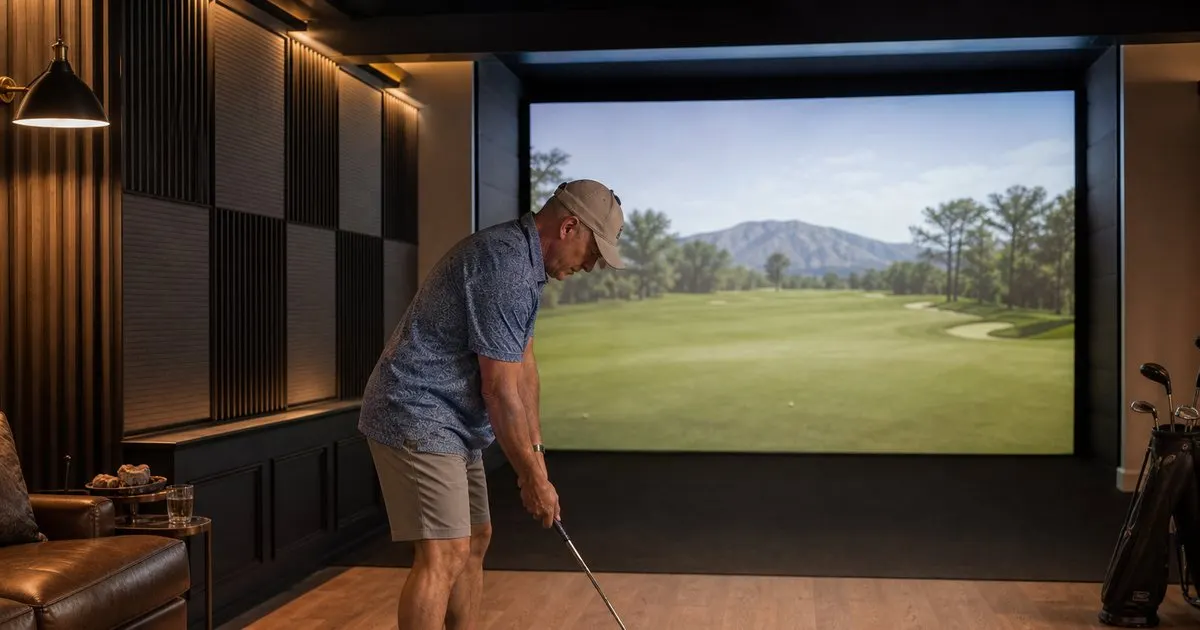
The noise you actually hear
The loudest part of a golf bay is not the software, it is the impact of ball on screen and club on mat. That energy travels through the structure of the house as much as through the air. Related: Why does impact screen quality matter more than most buyers expect?
Because the noise is structural, simply adding a soft panel to a wall does little. The energy needs to be absorbed at the source and stopped from traveling through the building.
Keep reading: How much space does a premium home golf simulator bay actually require?, Which launch monitor technology gives the most accurate readings for home use?, What separates a five thousand dollar bay from a fifteen thousand one?. See how Golfbayr helps you the complete guide to premium home golf simulators.
Decoupling the impact
Installers use resilient underlay beneath the hitting area to absorb the shock of each strike before it enters the floor. A decoupled screen frame does the same for ball impact. Related: When should you worry about humidity and temperature in a basement golf bay?
The aim is to break the path that vibration would otherwise take into joists and walls. Interrupt that path and the thud that carries through a house largely disappears.
Treating the room itself
Wall and ceiling treatment tames the airborne noise and the echo that makes a bare room feel harsh. Absorption at the right points keeps the sound inside contained and comfortable.
A treated room is also more pleasant to spend time in. The same measures that keep noise from the rest of the house make the bay itself sound calm.
Planning for daily use
If you intend to play early or late, treat acoustics as a core cost rather than an afterthought. Retrofitting isolation into a finished room is far harder than building it in.
Done well, a bay can be used before the household wakes without disturbing anyone. That freedom is what turns a simulator into a genuine daily habit. Related: How do you light a home golf simulator bay without confusing the launch monitor?
- Impact noise is structural, so soft panels alone are not enough
- Resilient underlay and a decoupled screen absorb shock at the source
- Room treatment tames echo and airborne noise
- Plan isolation early if you want early or late sessions

Julien Jimenez
Julien Jimenez is an independent software builder based in Paris. He designs, ships, and operates focused SaaS products for small businesses and independent professionals. Read the full author page.
Frequently asked questions
Why do soft wall panels alone not work?
Because most of the disruptive noise travels through the structure, not the air. Panels help with echo, but you must decouple the impact at the floor and screen to stop the thud carrying through the house.
Can I add soundproofing later?
You can, but retrofitting isolation into a finished room is harder and costlier than building it in. If early or late play matters, plan acoustics from the start.
Your Game, Ready Every Morning
The complete guide to premium home golf simulators. Golfbayr is built to help you put this into practice.
Build your bayMore from the Golfbayr blog
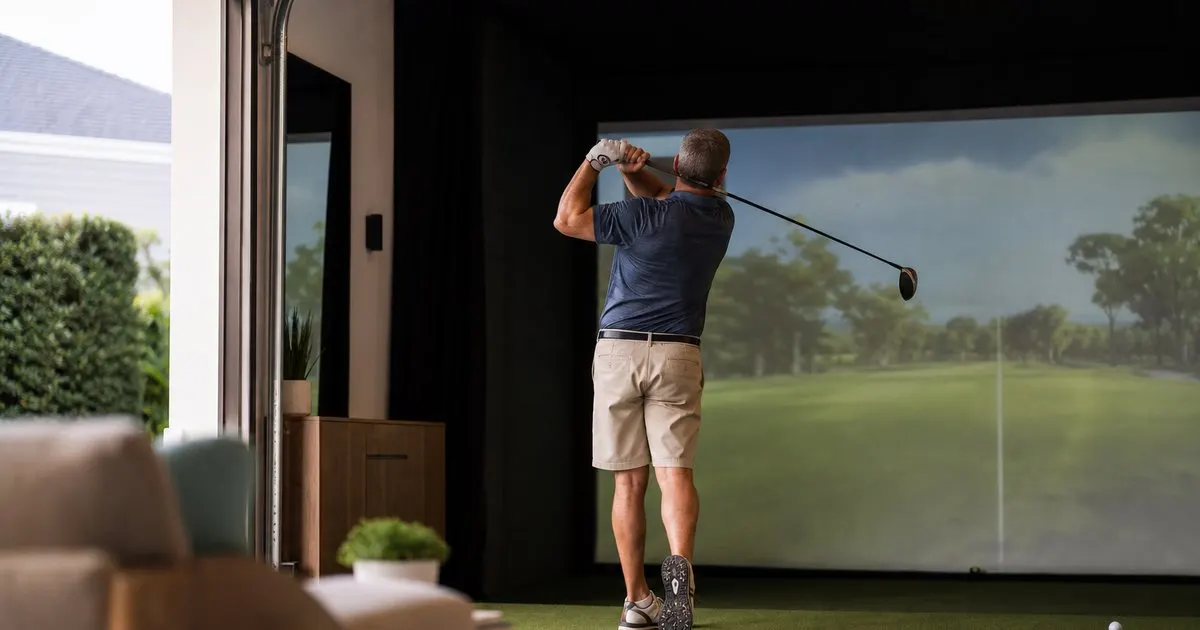
How much space does a premium home golf simulator bay actually require?
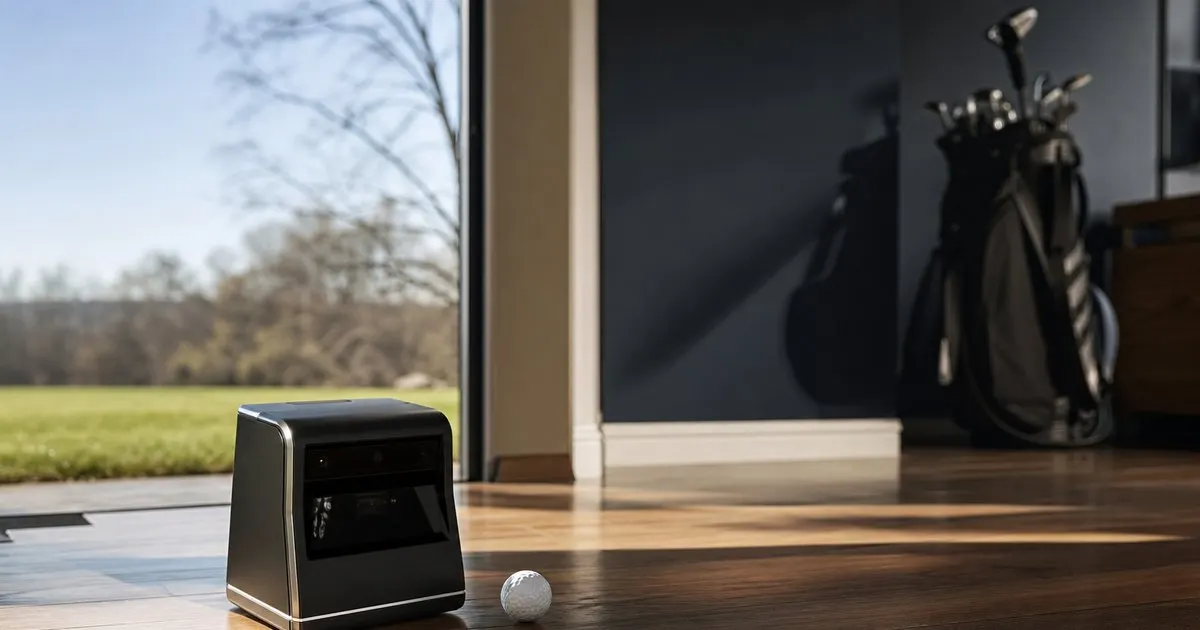
Which launch monitor technology gives the most accurate readings for home use?
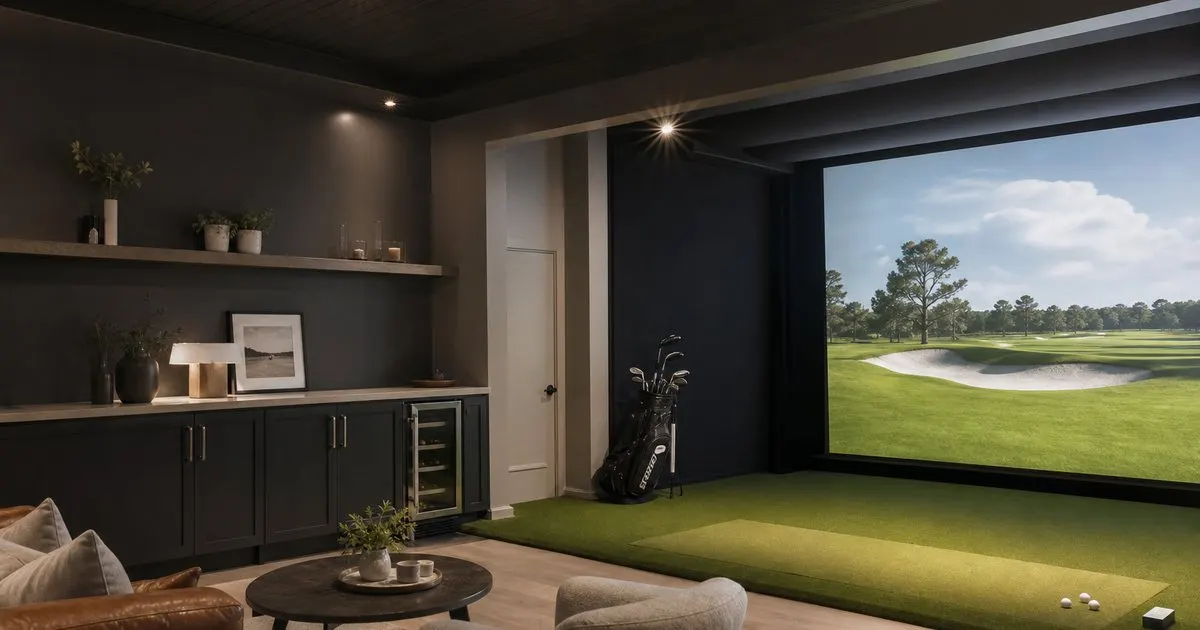
What separates a five thousand dollar bay from a fifteen thousand one?
Get the complete home golf simulators guide
Our full buying guide, the price guide, and new research as we publish it. One email, no spam, unsubscribe any time.