How much space does a premium home golf simulator bay actually require?
The room, not the hardware, decides which setups are possible. Here is how to measure honestly before you shop.
A calm, independent look at what separates a truly excellent home hitting bay from an expensive corner of the garage. Criteria, budgets, and the questions worth asking before you commit.
An independent guide. We may earn a commission from some links, at no extra cost to you.
Fall build window. The days shorten and the build window opens. A clear plan for the room, the screen, and the projector now means hitting balls by the first frost.
Plan the projector positionThe balanced choice, where accuracy, image, and acoustics all reach a high standard. Precise dual sensing launch monitor, Multi layer impact screen, Short throw projector, tuned geometry.
The launch monitor gets all the attention, yet the bays that disappoint tend to fail on space, light, and sound rather than on data. A room chosen for convenience instead of dimensions quietly limits which clubs you can swing freely.
The result is a handsome installation that gets used for a month and then gathers covers. A little planning at the start, around ceiling height, screen quality, and honest floor space, is what turns a novelty into a room you use before work.
The details that separate a considered purchase from an expensive mistake at this level.
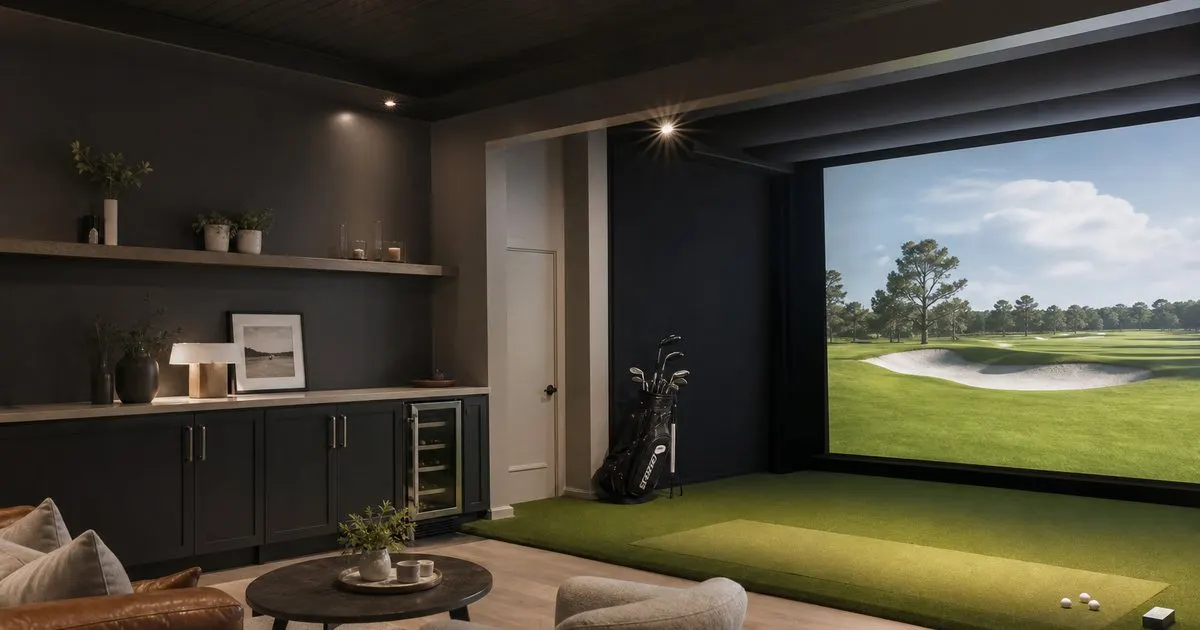
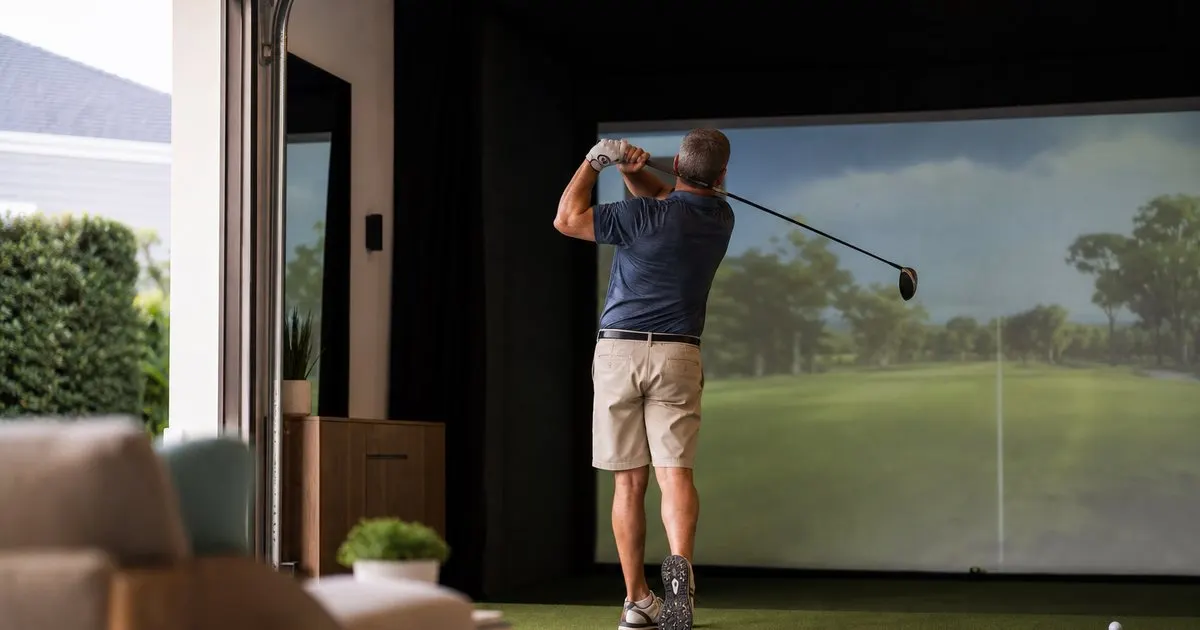
Look for a genuine nine to ten feet of height so a full driver swing never feels compromised. Measure at the lowest joist, not the peak, and account for the golfer, not just the club.
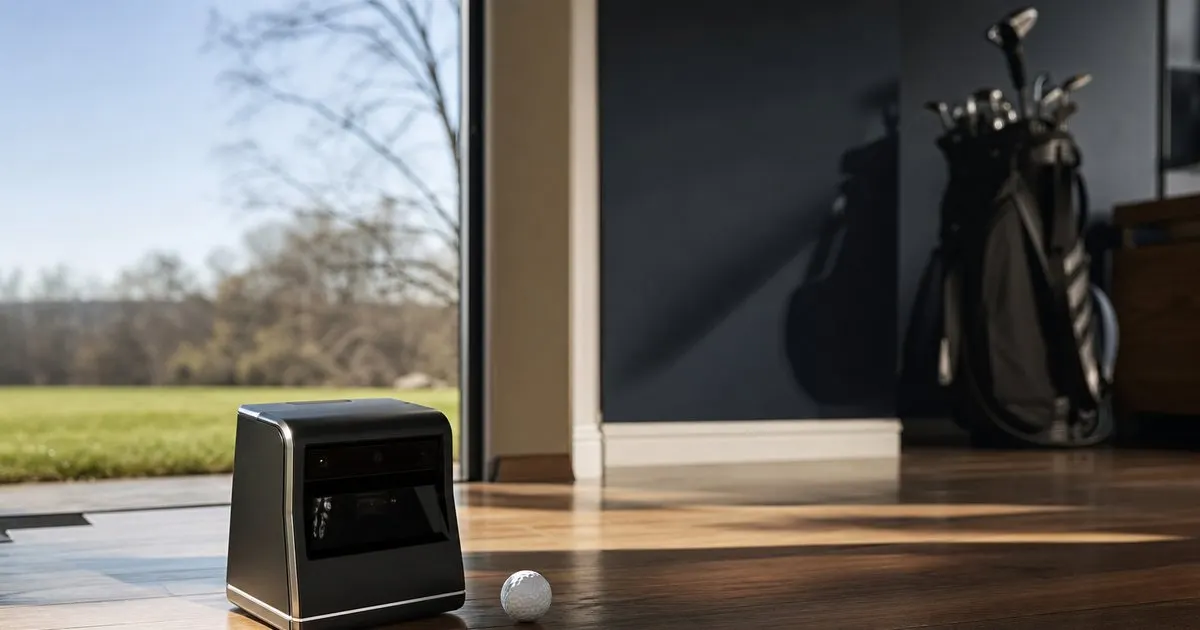
Assess how the unit measures the ball and the club, its tolerance to lighting, and whether it reads your shorter clubs well. Consistency across a session matters more than a single headline number.
A dense, multi layer impact screen protects the room and keeps the image crisp. The enclosure should absorb energy quietly and frame the picture without ripples or hot spots.
Throw distance, brightness, and mounting decide whether the picture is immersive or washed out. A short throw lens placed correctly keeps shadows off the screen during your swing.
A quality mat with a forgiving strike zone protects your wrists and your floor. Look for a putting friendly surround and a turf insert you can replace as it wears.
Impact noise travels through structure, not just air. Resilient underlay, wall treatment, and a decoupled screen keep early sessions from waking the house or the neighbors.
A calm, three step way to arrive at the right choice with confidence.
Record height, width, depth, and any obstructions before you shop. The space, not the marketing, decides which setups are even possible for you.
A single figure handicapper and a weekend player want different data and different budgets. Choose the monitor and screen that suit how you actually practice.
Decide flooring, light control, and acoustics first, then select the hardware to fit. A considered room flatters modest gear far more than the reverse.
A clear sense of what to expect at every level, from entry to bespoke. Independent guidance, never a sales pitch.
Figures are typical US market ranges to guide your planning, not quotes.

Written by an independent editorial team that spends its days in real hitting bays rather than showrooms. We take no manufacturer direction, name no brands, and care only that your room gets used long after the novelty fades.
Most adult swings want nine to ten feet at the lowest point. Taller players and steep swings prefer the upper end. Measure before you fall for any particular setup.
A well chosen monitor in a properly lit room gives data consistent enough to guide real practice. The gains come from using it often, not from any single feature.
Often yes, if height, temperature, and light are managed. Garages frequently need insulation and a heater or cooler to stay comfortable through the year.
No. We are an independent guide. We describe criteria and budgets so you can choose well, and we do not sell hardware or take the place of a professional installer.
A pre-built bay can be assembled in a day or two. A dedicated room with acoustic and electrical work is a proper renovation and should be planned as one.
No. Nothing here is financial advice. We simply lay out the trade-offs so your decision reflects your budget, your game, and your home.
Our full buying guide, the price guide, and new research as we publish it. One email, no spam, unsubscribe any time.
The complete guide to premium home golf simulators. Independent guidance, written to help you choose well.
Read the complete guide