When should you worry about humidity and temperature in a basement golf bay?
Basements offer quiet and generous footprints, but they trade those for damp air and cool slabs. Knowing when conditions begin to threaten screens, mats and electronics keeps a luxury bay from aging years ahead of schedule.

What damp air does to a bay over a season
Impact screens are polyester, and like a shower curtain the fabric itself absorbs very little water. The real risk is what grows on its surface. Dust, ball residue and the oils left by hands collect on the weave, and once the air stays humid for weeks that film becomes a food source for mildew, which shows up as spotting and a faint musty odor that never fully clean out. Turf and hitting mats suffer in their own way, holding moisture in the backing and releasing an unmistakable smell when the room warms. None of this happens overnight, which is exactly why it is dangerous: by the time the screen looks tired, a season of damp has already done its work. Related: Why does impact screen quality matter more than most buyers expect?
Electronics face a different threat. A launch monitor, projector or computer that sits in cool, moist air and then warms during use can form condensation on lenses, circuit boards and sensors. Projector optics fog, camera based sensors lose clarity, and corrosion begins on connectors long before anything fails outright. Wood framing behind the enclosure and any drywall touching the slab can also wick moisture, which is a structural conversation rather than a golf one, but it usually announces itself first through the smell in the bay. Related: Which launch monitor technology gives the most accurate readings for home use?
Keep reading: How much space does a premium home golf simulator bay actually require?, Which launch monitor technology gives the most accurate readings for home use?, What separates a five thousand dollar bay from a fifteen thousand one?. See how Golfbayr helps you the complete guide to premium home golf simulators.
The thresholds that actually matter
Relative humidity is the number to watch. Building science guidance generally places the comfortable, low risk band somewhere between roughly thirty and fifty percent. Above about sixty percent, sustained for weeks, mold growth on organic surfaces becomes likely and fabric begins to absorb noticeably; well below thirty percent, static electricity rises and some materials dry out and become brittle. A basement in a humid climate without dedicated control will often sit above the upper line all summer, and the bay's own sealed enclosure can trap moist air in the worst place.
Temperature is less about damage and more about performance. A cool slab makes hitting mats firmer and less forgiving, changes how a golf ball compresses at impact and leaves a golfer swinging in a sweater with a shortened, tighter motion. A stable, moderate room temperature keeps the mat consistent and the launch monitor readings comparable from one session to the next. The transitions matter too: carrying a cold launch monitor from a car into a warm bay and starting immediately invites condensation, so give equipment time to acclimate. Related: How much space does a premium home golf simulator bay actually require?
Controlling it: dehumidification, air movement and the slab
The most effective single step in a basement bay is a dedicated dehumidifier with a continuous drain, sized for the space and set to hold the room in the comfortable band automatically. A unit that must be emptied by hand will be forgotten, and the room will drift. Where the home's central system serves the basement, ask the installer to confirm there is both a supply and a return in the bay, since a supply without a return leaves stale, damp air pooling behind the enclosure.
Address the slab and walls as well. A vapor barrier beneath the turf and hitting platform stops ground moisture from migrating into the surface layers, and insulation under the platform keeps the hitting area from feeling like a cellar floor. Gentle air movement, even a quiet fan on a timer, prevents the microclimate that forms behind a tensioned screen. A basic hygrometer placed near the enclosure, ideally one that logs readings, turns guesswork into a number you can act on.
Seasonal habits that protect the investment
Set a routine tied to the seasons. In late spring, before humidity climbs, confirm the dehumidifier drain is clear and the setpoint is correct. In fall, when heating begins to dry the air, check that the room is not dropping too low. Inspect the screen's tension and surface at each change, wipe down turf and mats, and look at cable connectors for any sign of corrosion. Ten minutes each season is enough to catch problems while they are still cosmetic.
Store what you can off the floor. Golf bags, spare balls and accessories left directly on the slab absorb moisture from below; a rack or shelf lifts them into the conditioned air. Cover the launch monitor and projector when the room will sit unused for weeks. The dehumidifiers and hygrometers this site links to may earn it a commission. Whatever you choose, a bay that holds steady humidity and a moderate temperature will look and perform like new far longer than one left to the basement's default climate. Related: Should you choose a ceiling mounted or floor standing simulator setup?
- Damp air slowly degrades screens, turf and connectors long before anything visibly fails.
- Aim to keep relative humidity roughly between thirty and fifty percent and watch for sustained readings above sixty.
- A dehumidifier with a continuous drain, a return air path and a vapor barrier under the platform do most of the work.
- Let cold equipment acclimate, store gear off the slab and inspect the bay at each change of season.

Julien Jimenez
Julien Jimenez is an independent software builder based in Paris. He designs, ships, and operates focused SaaS products for small businesses and independent professionals. Read the full author page.
Your Game, Ready Every Morning
The complete guide to premium home golf simulators. Golfbayr is built to help you put this into practice.
Build your bayMore from the Golfbayr blog

How much space does a premium home golf simulator bay actually require?
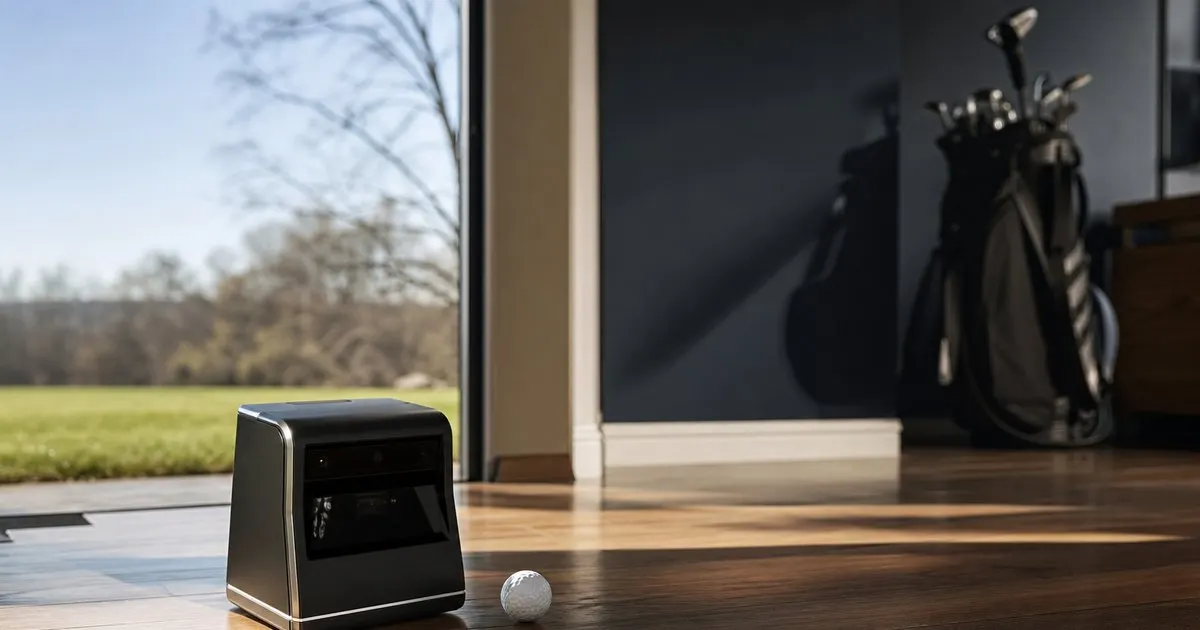
Which launch monitor technology gives the most accurate readings for home use?
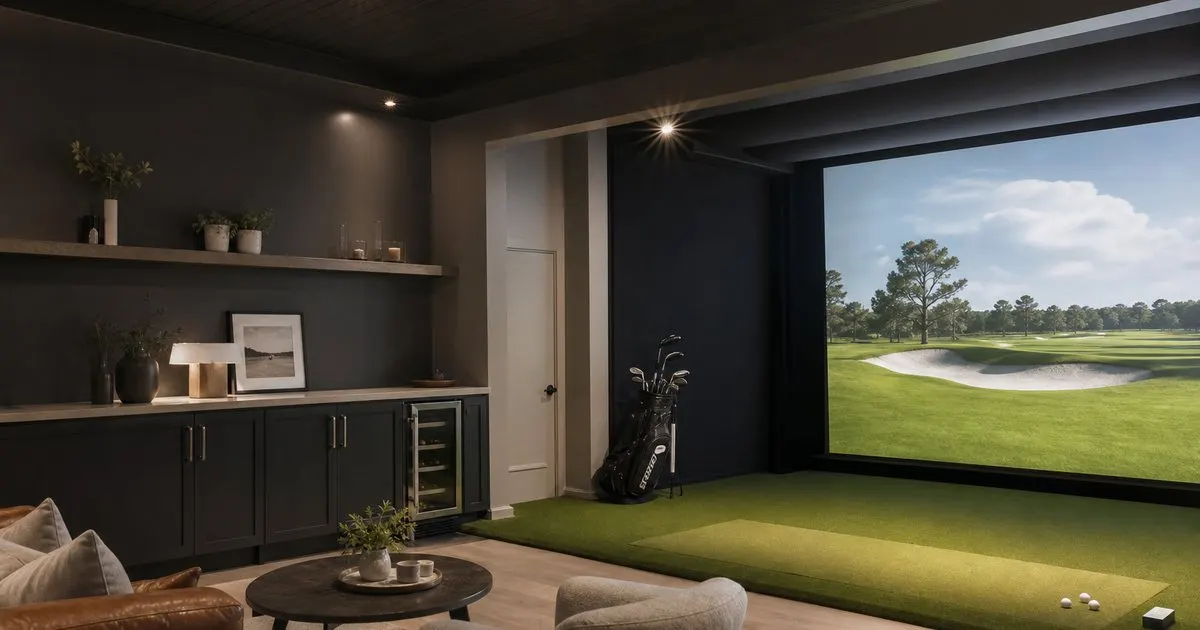
What separates a five thousand dollar bay from a fifteen thousand one?
Get the complete home golf simulators guide
Our full buying guide, the price guide, and new research as we publish it. One email, no spam, unsubscribe any time.