What should a homeowner do when converting a garage into a golf simulator bay?
A garage offers the ceiling height and footprint that most interior rooms lack, but it brings temperature swings, a sloped concrete floor and a door that wants to leak air. A sound plan handles all three before any equipment arrives.

Measure with a club in your hand, not a tape alone
Garages look tall until you account for what hangs from the ceiling. Door tracks, the opener motor and its rail, light fixtures and often a beam or ductwork all eat into the height right where a golfer needs it. Stand on the spot you intend to hit from, hold a driver at the top of a full swing and have someone watch the clubhead against every obstruction, then repeat for the tallest golfer who will use the room. If the opener rail is in the way, a side mount or high lift conversion moves the mechanism out of the swing arc and is a modest cost relative to the bay.
Orientation is the next choice. Hitting toward the back wall keeps the garage door behind you and preserves the option of parking a car on the other side of a two car bay, while hitting toward the side wall can give more depth at the expense of blocking the door entirely. Sketch both with the enclosure footprint, the launch monitor's required distances and a comfortable walkway, and remember that a radar unit behind the ball needs several feet of clear space behind the mat while a camera unit beside it needs width. Related: Which launch monitor technology gives the most accurate readings for home use?
Keep reading: How much space does a premium home golf simulator bay actually require?, Which launch monitor technology gives the most accurate readings for home use?, What separates a five thousand dollar bay from a fifteen thousand one?. See how Golfbayr helps you the complete guide to premium home golf simulators.
Climate, moisture and the slab beneath your feet
Most garages are uninsulated boxes with a slab that sweats in humid weather and radiates cold in winter. Left alone, that environment makes hitting mats stiff, encourages mildew on the impact screen and puts condensation on projector optics and electronics. The fix begins with insulation in the walls and ceiling, an insulated garage door or a framed wall in front of it, and air sealing around the door perimeter, which is usually the largest leak in the building. A ductless mini split heat pump is the common solution for heating and cooling a converted garage, since it needs no ductwork and can dehumidify in summer. Related: Should you choose a ceiling mounted or floor standing simulator setup?
The slab deserves its own attention. Garage floors slope toward the door by design, so a level hitting platform means building sleepers or a raised subfloor that shims the slope out, with a vapor barrier beneath to stop moisture migrating into the turf and mat. That platform is also the opportunity to add insulation under the hitting area and to run cabling in channels rather than across the surface. Test the slab for moisture before you cover it; a simple plastic sheet taped down for a day or two will show whether water is coming up through the concrete.
Power, data and the door question
A bay needs more electrical capacity than a garage typically has: dedicated circuits for the projector and computer, outlets at the enclosure, the lounge area and wherever the launch monitor lives, plus the mini split on its own circuit. Run a wired network connection to the computer location while the walls are open, since course downloads and online play are far happier on cable than on a signal that has to fight its way through a garage wall. Plan lighting circuits at the same time, keeping the hitting zone and the screen wall separately controlled. Related: Why does impact screen quality matter more than most buyers expect?
Then decide what to do with the garage door itself. Sealing and insulating the existing door is reversible and preserves the space as a garage in the eyes of a future buyer. Framing a permanent wall in front of it produces a better room but may change how the space is classified, trigger permit requirements and, in some neighborhoods, conflict with homeowners association rules that require covered parking. Check local requirements before committing, and lean toward reversible choices unless you are confident the house will never need the garage back.
Finishing so it feels like part of the house
The difference between a garage with a simulator in it and a golf room that happens to occupy the garage is the finish work. Drywall over the insulation, a ceiling that hides the structure, acoustic panels on the side walls to tame the crack of impact, and a durable floor such as epoxy or luxury vinyl in the non-hitting areas transform the feel. A small seating area with a bar counter or a pair of comfortable chairs turns practice into something the household will join. Related: How much space does a premium home golf simulator bay actually require?
Keep resale in mind throughout. A reversible conversion that a buyer can read as a flexible bonus room adds appeal, while an aggressive build that eliminates parking in a market where garages matter can narrow the pool of buyers. Most of what matters in a garage conversion is not a product at all, which is worth saying plainly on a site that earns a commission on some of the equipment it links to. Spend on the invisible layers first, meaning insulation, moisture control, power and a level platform. Equipment can be upgraded any time; a damp, cold, sloped room undermines everything placed in it.
- Swing a driver under every ceiling obstruction and relocate the opener rail if it intrudes.
- Insulate, air seal and add a mini split before any equipment, or the climate will punish it.
- Build a level, vapor sealed platform over the sloped slab and route cabling through it.
- Prefer reversible changes to the garage door and check permits and HOA rules before framing.

Julien Jimenez
Julien Jimenez is an independent software builder based in Paris. He designs, ships, and operates focused SaaS products for small businesses and independent professionals. Read the full author page.
Your Game, Ready Every Morning
The complete guide to premium home golf simulators. Golfbayr is built to help you put this into practice.
Build your bayMore from the Golfbayr blog

How much space does a premium home golf simulator bay actually require?
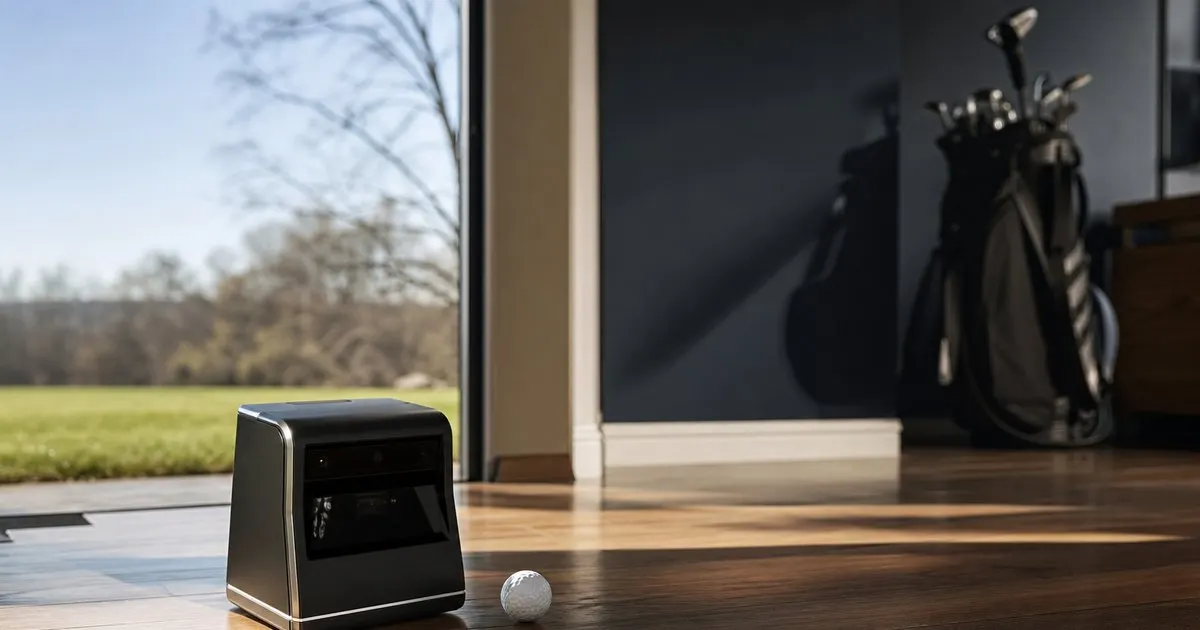
Which launch monitor technology gives the most accurate readings for home use?
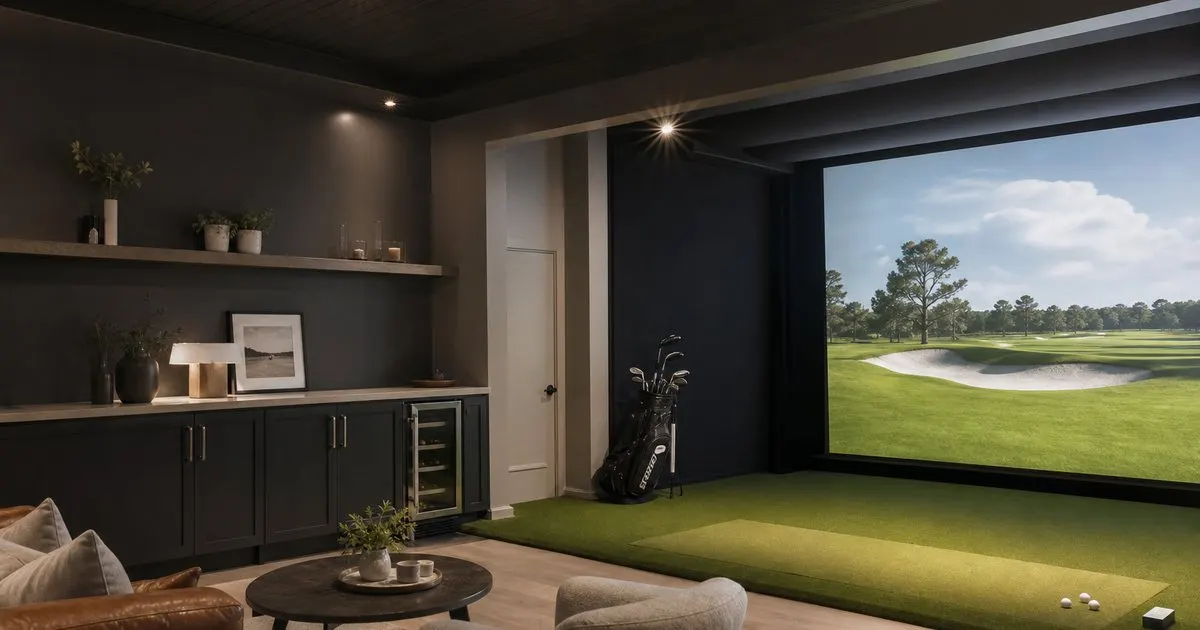
What separates a five thousand dollar bay from a fifteen thousand one?
Get the complete home golf simulators guide
Our full buying guide, the price guide, and new research as we publish it. One email, no spam, unsubscribe any time.